 Igor Rozovski
How to light a painting so it glows
Light can double the impact of an oil painting — or flatten it with glare. A short guide to lamps, angles and colour temperature.
An oil painting is made of light: highlights, glazes, transparent shadows. The right lighting reveals all of it.
Daylight first
Soft, indirect daylight is ideal. Hang the painting on a wall that is beside a window rather than opposite it — the light will slide across the surface and show the texture. Avoid direct sun: over the years it fades pigments and dries the varnish.
Warm, not cold
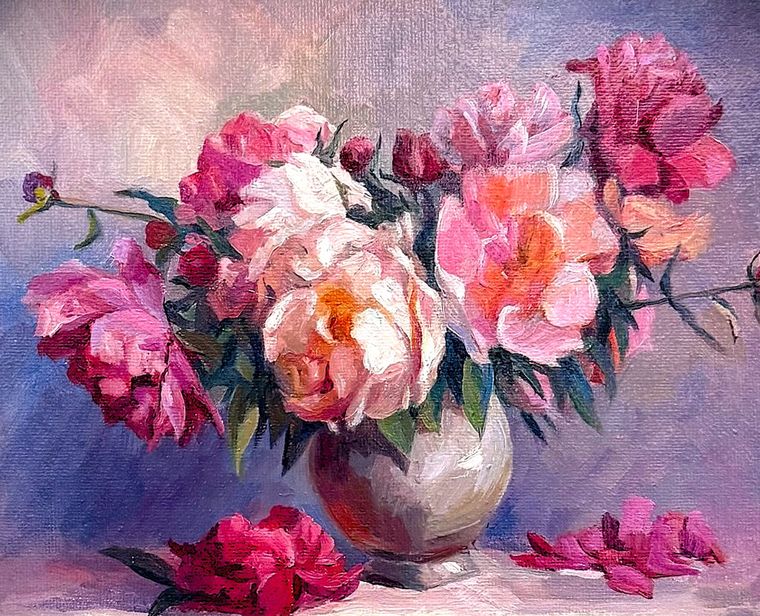
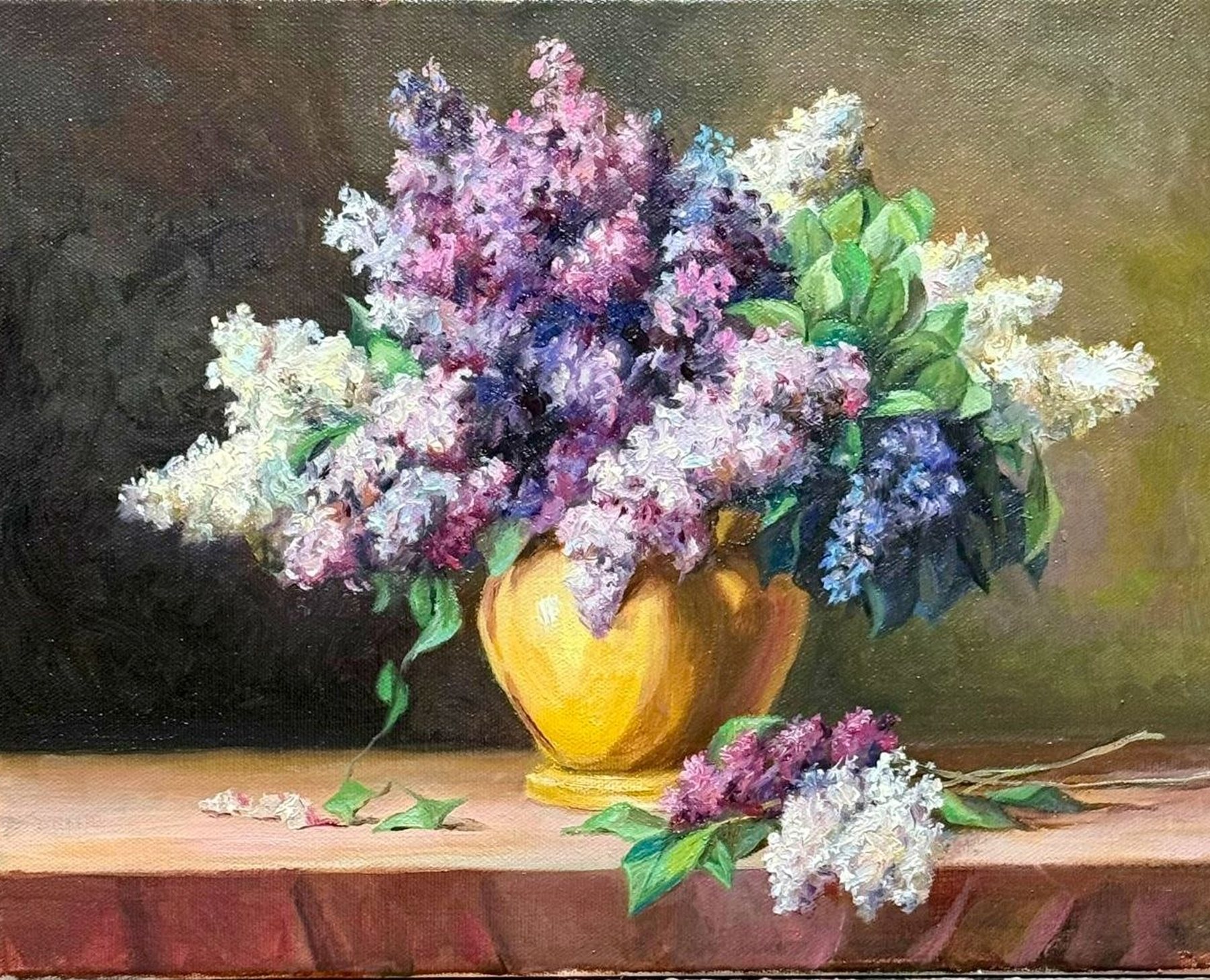
For evening light, choose bulbs around 2700–3000 K. Warm light suits most classical paintings: golds glow, skin tones and petals come alive. Cold “office” light makes colours look grey.
Angle: about 30 degrees
A picture light or spotlight should hit the canvas at roughly 30° from the wall. Steeper — and you get long shadows from the frame; flatter — and you get glare on the varnish.
Good colour rendering
Look for LED lamps with a high colour rendering index (CRI 90+). It is written on the packaging. With a low CRI, reds and greens lose depth.
Options that work
- A picture light above the frame — classic, cosy, perfect for a living room.
- A ceiling spotlight aimed at the painting — invisible and elegant.
- A floor or table lamp nearby — the simplest option, and often the most atmospheric.
Turn off the main light in the evening and leave only the lamp on the painting. You will see it in a completely new way.
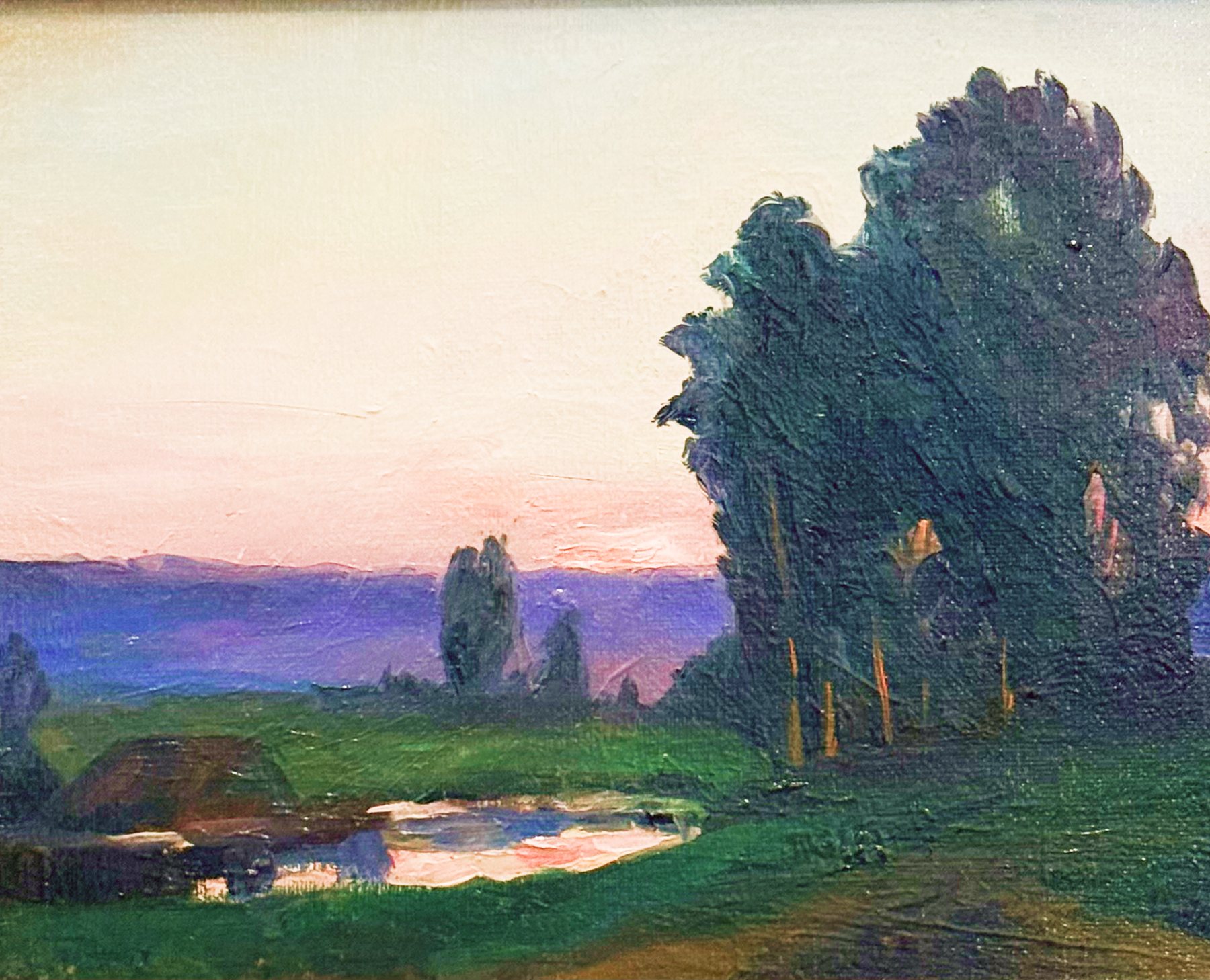
Evening landscapes like Evening Glow are especially beautiful under warm light.